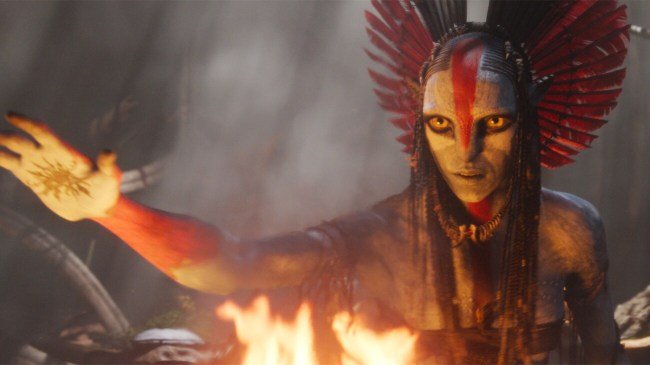
The “Avatar” franchise is beloved for several reasons, from its incredible action to its pioneering use of 3D special effects. But if there’s a main appeal to James Cameron’s mega blockbuster series, it’s stepping into the world of Pandora and the culture of the Na’vi, which is brought to life in part by production design. And while the series takes place in the future, production designer Dylan Cole explained why the attention to detail required him to approach the project like a period piece.
Ahead of the release of “Fire and Ash,” the third entry in the “Avatar” franchise, Procter and fellow production designer Dylan Cole sat down with IndieWire’s Jim Hemphill, along with several other production designers from films such as “Hedda,” “The Testament of Ann Lee,” “Train Dreams,” “Kiss of the Spider Woman,” “One Battle After Another,” and “Sentimental Value.” The two discussed their work on the popular blockbuster franchise and on the highly anticipated new installment in Cameron’s series.


“Imagine having to do like a 1920s Paris film, but you don’t know what Art Nouveau looks like,” Dylan Cole said in the roundtable interview. “So first you need to design Art Nouveau, come up with that broad range, then pick which of those elements you want to put in your film. That’s kind of what we’re doing with all the different Navi cultures. There’s a common misconception that in science fiction, ‘it’s easy, you just make it up.’ If we design something too alien or too unrecognizable or are designers just go nuts, then it’s either distracting or you can’t relate to it. So it needs to find that middle ground where it is aspirational and interesting but it it is still relatable, where we can engage with the story.”
According to Cole, the challenge of making an “Avatar” film comes from bringing to life the Na’vi cultures of the world of Pandora, which are both connected and decidedly different from each other. He likened the experience of production designing with that in mind to making a historical film in which you need to invent the entire context and aesthetic of the period the film is inhabiting.
For more from all of our craft roundtables, click here.